


 English
 русский
 Español
 عربى
Common PET Preform Blow Moulding Problems and How to Investigate Them
A clear, consistent PET bottle depends on more than the appearance of the PET preform. Preform condition, heating, stretching, air pressure, bottle mould design, and machine settings can all influence the finished container.
When a defect appears, changing several settings at once can make the cause difficult to identify. A practical approach is to record the defect, check whether it affects individual cavities or the whole production line, and adjust one factor at a time.
Below are several appearance and performance issues that may occur during PET bottle blow moulding, along with points worth checking.
Uneven Bottle Wall Thickness
Uneven wall thickness can leave one area of a bottle too thin while another area contains excess material. This may affect the bottle’s appearance and its performance during filling, handling, or transportation.
Possible factors to investigate include:
(1)Uneven heating along the PET preform
(2)Preform position during heating
(3)Stretch rod alignment and movement
(4)Blowing timing and air supply
(5)Compatibility between the preform and bottle design
Measure the wall thickness at agreed locations around the bottle. If the variation appears only in bottles from a particular mould cavity, inspect that cavity and its associated components. If the issue appears across the line, review the preform and process settings.
Hazy or Cloudy Bottle Appearance
Clear PET preforms are commonly selected for water, beverage, edible oil, and personal-care packaging because they can produce transparent bottles. If a finished bottle appears cloudy, inspect both the preform and the blown bottle to identify where the change occurs.
Factors to review may include the preform’s initial appearance, heating conditions, stretching behaviour, and mould cooling. Contamination or surface marks may also affect the visual result.
Compare samples from different production times or mould cavities. Keep the bottle design and operating conditions in the record so that the production team and PET preform supplier can investigate with the same information.
Pearlescence or Whitish Areas
A white or pearly appearance can occur when material is stretched beyond a suitable range during blowing. The location of the mark can provide useful clues: for example, it may appear in a highly stretched section of the bottle rather than across the entire surface.
Check the heating profile, preform temperature distribution, stretch timing, and the relationship between the preform design and the finished bottle shape. A trial with adjusted settings can help determine whether the material is being stretched under suitable conditions.
Do not rely on appearance alone. Inspect the affected area and check the finished bottle against the project’s agreed performance requirements.
Off-Centre Bottle Base
An off-centre base can affect the bottle’s appearance or stability. To investigate, examine whether the issue is consistent across all cavities or limited to one mould position.
Points to check include:
(1)Stretch rod alignment
(2)Preform positioning in the mould
(3)Condition and alignment of the bottle mould
(4)Heating uniformity around the preform
(5)Stretching and blowing sequence
If the problem occurs after a change of preform specification, confirm that the preform length and shape are compatible with the bottle mould and machine settings.
Bottle Deformation After Blowing
A PET bottle may look acceptable immediately after blowing but change shape during filling, cooling, storage, or handling. The cause depends on the application and should be assessed using the actual filling and distribution conditions.
Review the bottle design, wall-thickness distribution, filling temperature, cooling conditions, and storage environment. For products filled at elevated temperatures, confirm that the complete bottle design and production process are suitable for the intended conditions.
Retain samples from different stages—after blowing, after filling, and after storage—to determine when the deformation begins.
Neck Finish Damage
The neck finish connects the bottle to its cap and plays an important role in sealing. Damage to the thread, support ring, or sealing surface can create difficulties during capping or affect closure performance.
Inspect the PET preform before loading and check how it is handled through the feeding and heating systems. Also examine the mould and machine components that contact the neck.
When a new preform or cap is introduced, verify the complete neck specification and carry out a capping and leak evaluation using the intended bottle and closure.
Scratches and Surface Marks
Surface marks may originate during preform packing, transport, feeding, blowing, or finished-bottle handling. Identifying when the mark appears is an effective way to narrow the investigation.
Compare samples at several points:
(1)Before the PET preform enters the machine
(2)After the preform passes through the feeding system
(3)Immediately after the bottle is blown
(4)After the bottle moves through downstream equipment
Inspect contact surfaces, guides, conveyors, and packaging materials for rough areas or contamination. Keep preforms protected and use clean handling equipment to reduce avoidable damage.
Record the Results of Each Trial
A useful trial record allows production teams and suppliers to compare results without relying on memory. Include the PET preform batch, weight, neck finish, bottle design, machine and mould identification, operating settings, and time of production.
Photographs and samples are helpful, especially when they show the location and frequency of the defect. Change one relevant factor at a time where practical, then check whether the result improves. Confirm any proposed solution through a production run and the tests required for the finished package.
Discuss Preform Requirements with Your Supplier
A PET preform should be evaluated as part of the complete bottle production system. If a defect continues after equipment and process checks, share the trial records, preform specifications, bottle drawing, and representative samples with your supplier.
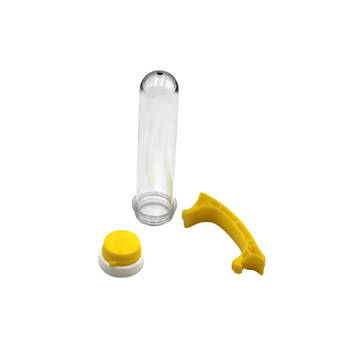
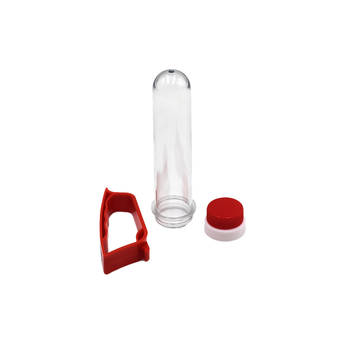
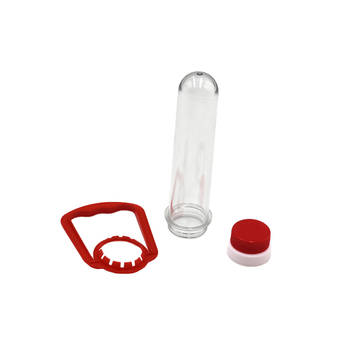
Taizhou Shunke Moulding Co., Ltd. offers PET preforms in a range of neck finishes and weights for applications including water, beverages, edible oil, personal-care products, and large water bottles. Standard and custom PET preform requirements can be discussed according to the bottle application and order quantity.
 +86-15157625901 / 13706572756
 info@suncomold.com
 No.2 Gongxin Avenue, Beicheng Street, Huangyan, Taizhou, Zhejiang, China

